📌 Key Takeaways
FEM Simulation: Your Digital Crash Test for Subwoofer Reliability: FEM simulation functions like a crash test for speakers, allowing engineers to create thousands of digital prototypes and test them under extreme conditions before building physical prototypes. This predictive engineering approach identifies and fixes weak points in the design, preventing failures that could damage your brand’s reputation.
Three Critical Failure Modes FEM Prevents: The technology specifically addresses voice coil thermal failure (the primary cause of subwoofer breakdown), magnetic field non-uniformity that creates harmonic distortion, and mechanical stress patterns in cone assemblies that lead to premature failure. Each of these represents a potential warranty claim or field failure that FEM simulation helps eliminate.
Validation Strategy for Vetting OEM Partners: Legitimate FEM users can share non-proprietary simulation data (stress plots, thermal maps, magnetic field visualizations), explain how FEM informs their R&D processes beyond marketing, and demonstrate consistency between claimed benefits and measurable product characteristics. This three-step verification process separates genuine technical capability from marketing positioning.
Business Impact Beyond Performance Specs: FEM-optimized designs translate to reduced warranty claims, fewer field failures, and the confidence to offer more aggressive performance specifications. For brand managers, this means fewer emergency product issues and more opportunities to differentiate on verifiable performance advantages.
Strategic Advantage for Brand Leadership: Understanding FEM simulation transforms you from a passive spec sheet reader into an informed evaluator of genuine technical capability, providing the foundation for building technically superior and more defensible product lines as you advance in your career.
This technical literacy becomes your competitive advantage in evaluating OEM partnerships, moving beyond surface-level claims to assess the engineering rigor that protects your brand and enables superior product positioning.
Introduction: The Buzzword on the Spec Sheet That Actually Matters
You’ve seen it across countless technical specifications: “FEM optimized motor design,” “FEA simulation engineering,” or simply “computer-optimized performance.” For product managers evaluating potential OEM partners, these terms appear everywhere—but what do they actually mean for your business and your brand’s reputation?
Most audio manufacturers throw around technical jargon without explanation, leaving you to wonder whether you’re looking at genuine engineering advancement or sophisticated marketing fluff. The stakes are high: choose the wrong partner, and you risk product failures, warranty claims, and the kind of brand damage that takes years to repair.
Here’s the reality—FEM simulation isn’t just another marketing term. It represents a fundamental shift in how serious manufacturers approach product development, turning guesswork into predictable science.
What is FEM Simulation? The Engineer’s Crystal Ball
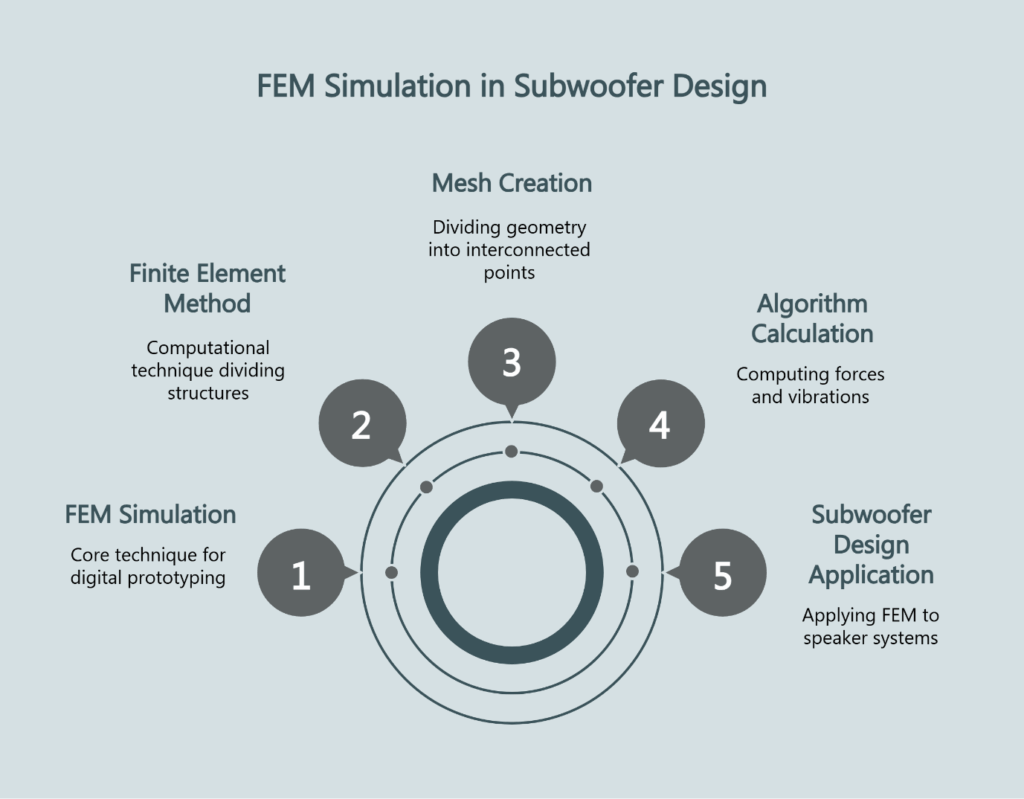
Think of FEM simulation as a crash test for a speaker, but for sound waves and magnetic forces. It allows engineers to create thousands of digital prototypes and test them under extreme conditions, finding and fixing weak points in the design before the first physical prototype is ever built. It’s about predicting failure to prevent it.
FEM stands for Finite Element Method—a computational technique that breaks down complex physical structures into smaller, manageable pieces (elements) for analysis. In subwoofer design, this means digitally recreating every component of the speaker system and subjecting it to virtual stress tests.
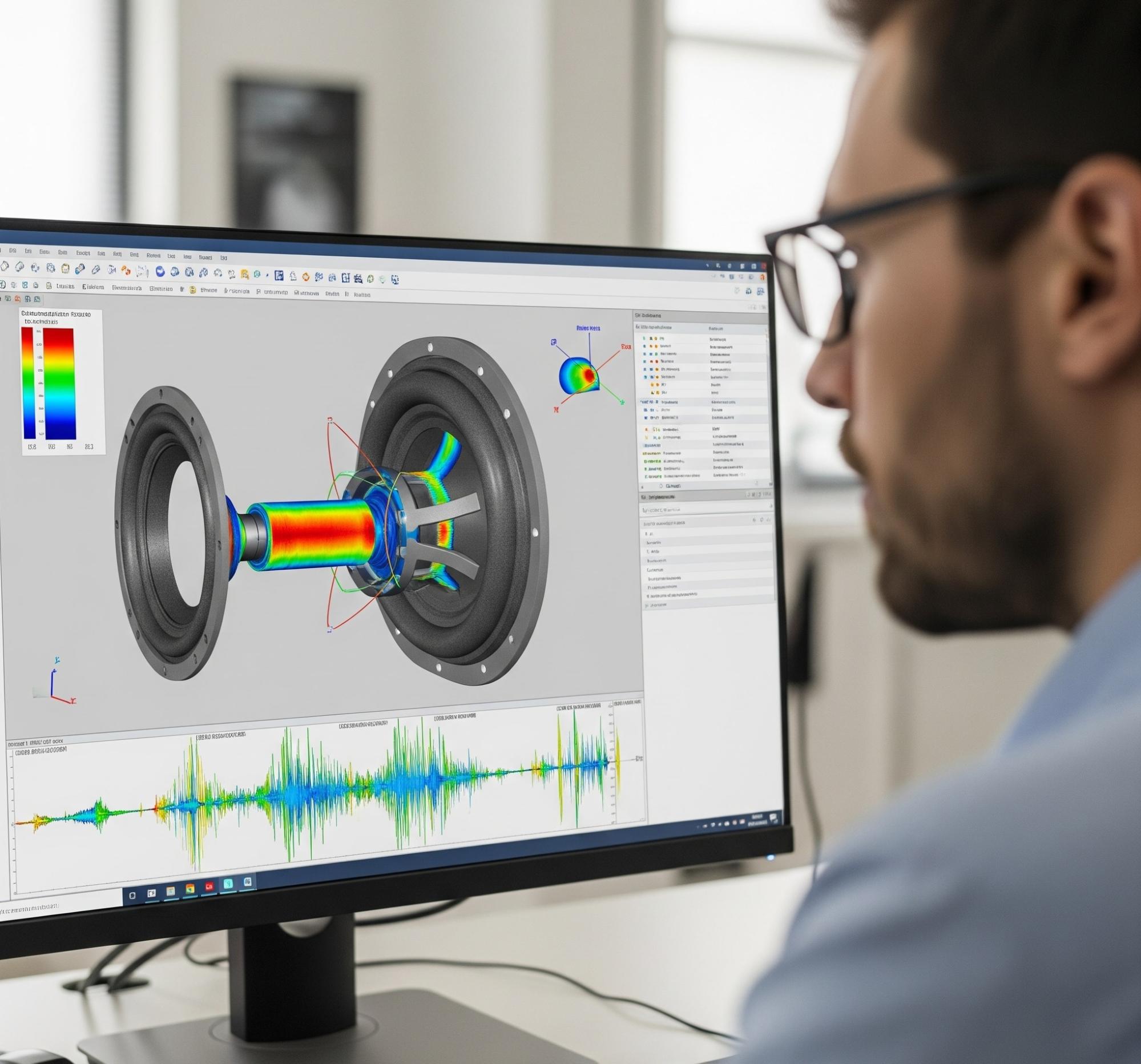
The process works by dividing the speaker’s geometry into a mesh of interconnected points. Each point represents a small piece of the overall structure, and sophisticated algorithms calculate how forces, heat, and vibrations travel through the entire system. Engineers can then visualize stress concentrations, temperature hotspots, and potential failure points before committing to expensive tooling.
Technical Note: For engineering teams evaluating partnerships, FEM simulation generates quantifiable data about magnetic flux density, voice coil excursion limits, and thermal dissipation patterns. This isn’t theoretical modeling—it’s predictive engineering that can be validated against real-world performance metrics.
How FEM Simulation Reduces the Risk of Subwoofer Failure
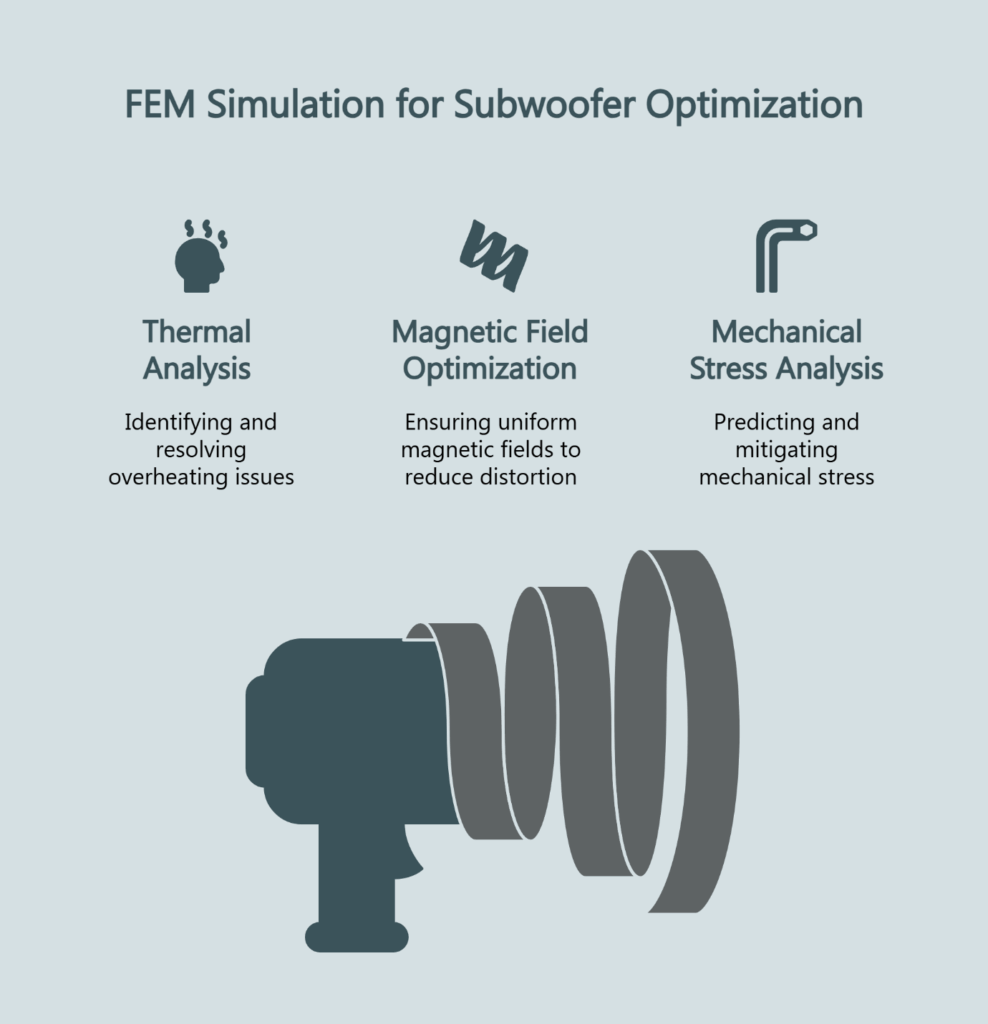
FEM simulation enables low-distortion performance by identifying and eliminating design flaws that would otherwise surface during production or, worse, in the field. The technology addresses three critical failure modes that plague conventional subwoofer development.
Preventing Overheating by Simulating Voice Coil Stress
Voice coil thermal failure remains the primary cause of subwoofer breakdown in high-performance applications. Traditional design methods rely on educated guesswork about heat dissipation, often leading to conservative designs that limit power handling or aggressive designs that fail under stress.
FEM thermal analysis maps exactly how heat flows through the voice coil assembly, identifying bottlenecks in the cooling path. Engineers can test different voice coil materials, former designs, and venting strategies digitally—optimizing thermal performance before cutting the first piece of wire. The result? Subwoofers that handle rated power consistently without the thermal protection circuits that compromise dynamic performance.
Optimizing Magnetic Fields to Eliminate Audio Distortion
FEM simulation validates advanced technical capability by ensuring magnetic field uniformity across the voice coil’s travel path. Non-uniform magnetic fields create harmonic distortion—particularly problematic in the low frequencies where subwoofers operate.
The simulation reveals how magnetic flux varies as the voice coil moves through its excursion range. Engineers can adjust magnet geometry, pole piece shapes, and even the inclusion of copper shorting rings to maintain linear magnetic coupling. This level of precision explains why FEM-optimized motors consistently measure lower in distortion testing compared to conventionally designed alternatives.
Improving Durability by Analyzing Cone and Surround Movement
FEM simulation reduces risk of product failure by predicting mechanical stress patterns in the cone assembly. The software calculates how different frequencies and power levels affect the cone, surround, and spider—revealing potential stress concentrations that could lead to premature failure.
This analysis directly influences material selection and geometry optimization. A manufacturer using FEM can demonstrate why they chose a specific cone material thickness or surround profile based on stress distribution data, not just industry convention or cost considerations.
Business Impact: The predictive nature of FEM simulation translates to measurable business advantages: reduced warranty claims, fewer field failures, and the confidence to offer more aggressive performance specifications. For brand managers, this means fewer middle-of-the-night calls about product problems and more opportunities to differentiate on performance.
What If…? Planning for a Partner Who Claims Tech They Can’t Prove
The reality of the supply chain gauntlet means encountering manufacturers who understand the marketing value of technical terms without possessing the underlying capabilities. Here’s your defense strategy:
Step 1: Ask for the Simulation Data. A manufacturer genuinely using FEM should readily share non-proprietary reports or visualizations from their simulations. Look for stress plots, thermal maps, or magnetic field visualizations. If they claim confidentiality on everything, that’s a red flag.
Step 2: Inquire About Their Process. Ask how FEM informs their R&D and quality control procedures, not just their marketing materials. Legitimate users integrate simulation results into design iteration cycles and can explain specific design changes made based on FEM findings.
Step 3: Look for Consistency. The claimed benefits of FEM optimization should align with measurable product characteristics. If they tout “FEM-optimized thermal performance” but can’t explain their voice coil cooling strategy or provide thermal power handling specs, the claims don’t match the capability.
Day-to-Day Application: This validation process becomes routine during technical evaluations. Rather than accepting technical claims at face value, purchasing teams can quickly separate manufacturers with genuine engineering capabilities from those relying purely on marketing positioning.
Conclusion: From Technical Spec to Strategic Advantage
Understanding FEM simulation transforms you from a passive spec sheet reader into an informed evaluator of genuine technical capability. This knowledge empowers better partner selection, reduces the risk of product failures, and provides a foundation for asking the right questions during the vetting process.
The manufacturers who invest in FEM simulation aren’t just building better subwoofers—they’re demonstrating a commitment to transparency and data-driven engineering that protects your brand’s reputation. In a market where technical claims are often difficult to verify, FEM represents verifiable proof of engineering rigor.
Looking ahead, this technical literacy becomes even more valuable as you advance in your career. Understanding these deeper engineering principles separates product managers from true brand strategists, enabling you to build technically superior and more defensible product lines. The ability to evaluate and leverage advanced manufacturing technologies like FEM simulation will define the next generation of audio brand leadership.
To see how this concept fits into the broader strategy, explore our complete guide to [REF::when-sourcing-creates-risk-a-framework-for-vetting-oem-subwoofer-manufacturers].
About the Author: By the ChinaFutureSound.com Insights Team
The ChinaFutureSound.com Insights Team is our dedicated engine for synthesizing complex topics into clear, helpful guides. While our content is thoroughly reviewed for clarity and accuracy, it is for informational purposes and should not replace professional advice.
Our Editorial Process
This content was drafted with AI assistance and has been reviewed, fact-checked, and edited by the expert humans on our Insights Team to ensure accuracy and clarity.