📌 Key Takeaways
Golden Sample Approval is Your Production Blueprint: The golden sample represents the definitive reference point for your entire production run, serving as the master template that manufacturers will replicate for mass production. Every aspect—from acoustic performance to cosmetic finish—becomes the standard, making thorough evaluation at this stage critical for quality control.
Front-Load Performance Testing Over Aesthetics: Structure your prototype evaluation systematically by testing functional performance under real-world conditions before examining cosmetic elements. This approach prevents the common mistake of rushing to judgment on early samples that prioritize core functionality over perfect aesthetics.
Communication Protocols Prevent Costly Delays: Establish structured communication from the beginning by designating single points of contact on both sides, implementing regular status updates during prototyping phases, and requiring written summaries of all verbal agreements to avoid translation gaps across languages and cultural contexts.
Buffer Time Protects Your Launch Timeline: Build adequate buffer time into your product launch schedule rather than planning around best-case scenarios, as the prototyping process involves iterative cycles that can extend beyond initial estimates depending on design complexity and revision requirements.
Documentation Creates Your Quality Reference: Document your golden sample approval in writing with photographs from multiple angles, as this documentation becomes your quality benchmark for evaluating production runs, handling customer returns, and making future product improvements.
This comprehensive guide transforms the complex prototyping journey into manageable, checkpointed stages while providing the essential 5-point checklist that serves as your practical tool for ensuring final products match your vision and customer expectations.
The excitement of launching your own custom audio product line comes with a critical question: what exactly happens after you decide to move forward with an OEM manufacturer? For online audio retailers, the prototyping phase represents both opportunity and anxiety—the chance to create something truly differentiated, paired with the very real risk of miscommunication, delays, and products that don’t match your vision.
The prototyping process doesn’t have to be a leap of faith. With the right roadmap, you can transform this complex journey into a series of manageable, checkpointed stages that give you control over the outcome.
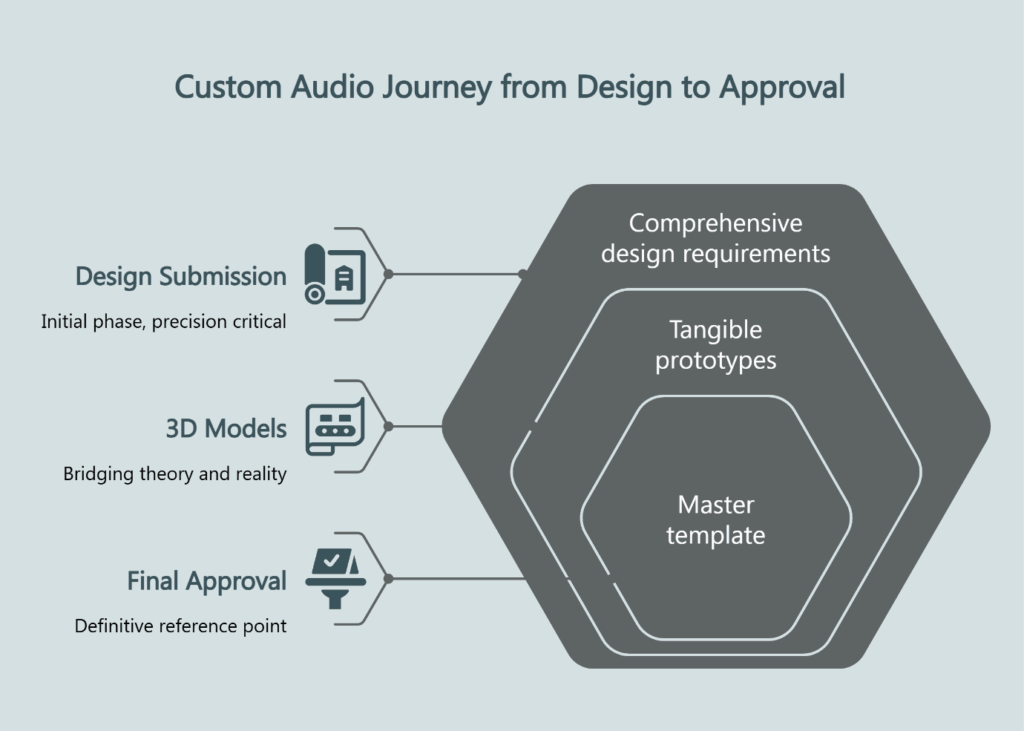
Stage 1: The Blueprint – Design Submission and Technical Review
Your custom audio journey begins with translating your vision into technical specifications. This initial phase sets the foundation for everything that follows, making precision absolutely critical.
Your primary role centers on providing comprehensive design requirements. This means detailed specifications covering power output, frequency response, impedance ratings, physical dimensions, and aesthetic preferences. The more specific your initial brief, the fewer surprises you’ll encounter downstream. Don’t assume your manufacturer will fill in the gaps—they need your explicit guidance on performance targets and design intent.
Meanwhile, your OEM partner evaluates your specifications for manufacturing feasibility. This review process helps identify any requirements that might present production challenges or opportunities for optimization. Sometimes a slight adjustment to driver configuration can improve performance while simplifying manufacturing.
The duration of this stage varies considerably based on design complexity and the extent of modifications required from existing product lines.
Stage 2: From Digital to Physical – 3D Models and First Samples
Once your design passes initial review, the concept moves from digital blueprints to tangible prototypes. This phase bridges the gap between theory and reality, where your specifications meet the constraints of physical manufacturing.
Your manufacturer’s engineering team typically creates detailed models to visualize the final product before physical production begins. These models help confirm dimensional accuracy and identify potential assembly considerations.
The first physical samples focus on demonstrating core functionality rather than perfect aesthetics. You’ll receive prototypes that allow you to evaluate sound quality, power handling, and basic performance characteristics, though cosmetic details might still require refinement.
Here’s where many retailers make a critical mistake: rushing to judgment on these early samples. Remember, this stage is about validating core performance, not nitpicking finish quality. Your feedback should focus on acoustic performance, dimensional accuracy, and functional requirements. Cosmetic refinements typically come in subsequent iterations.
The iterative nature of this phase means you might see multiple sample revisions before achieving the desired performance profile. Each cycle requires time for sample production plus shipping.
Stage 3: The ‘Golden Sample’ – Your Final Approval
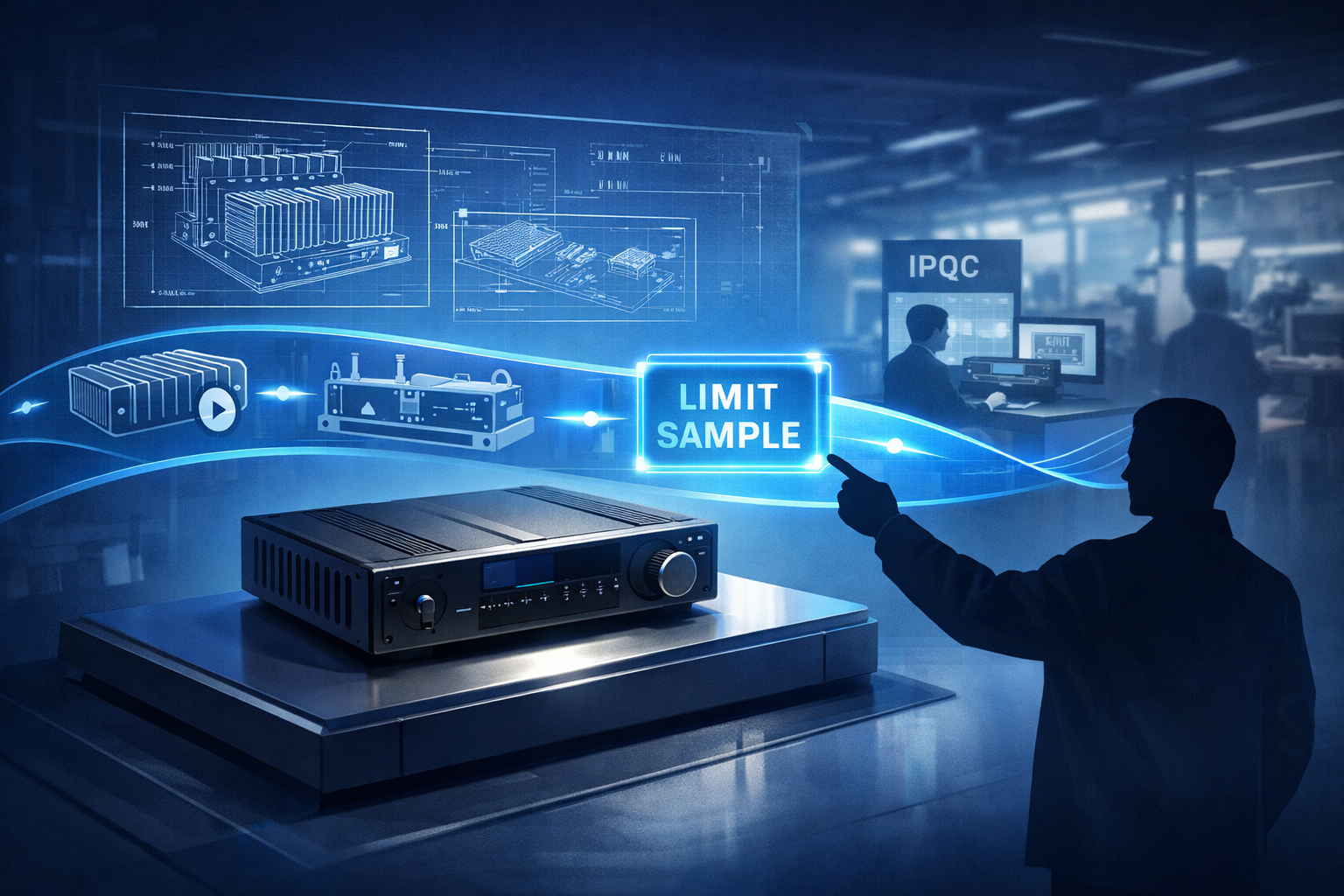
The golden sample represents the definitive reference point for your entire production run. This isn’t just another prototype—it’s the master template that your manufacturer will replicate for mass production.
The significance of golden sample approval cannot be overstated. Every aspect of this sample—from acoustic performance to cosmetic finish—becomes the standard for manufacturing. Any variation from this approved sample is considered a quality defect in subsequent production.
How do I give feedback to ensure the final product matches my vision?
Your feedback process determines whether your final products meet expectations or disappoint customers. Structure your evaluation systematically, documenting every aspect that matters to your brand and customers.
Start with functional testing before examining aesthetics. Verify power handling, frequency response, and any special features under real-world conditions. Only after confirming performance should you evaluate cosmetic elements like finish quality, logo placement, and packaging presentation.
5 Things to Confirm Before Approving Your ‘Golden Sample’ Prototype
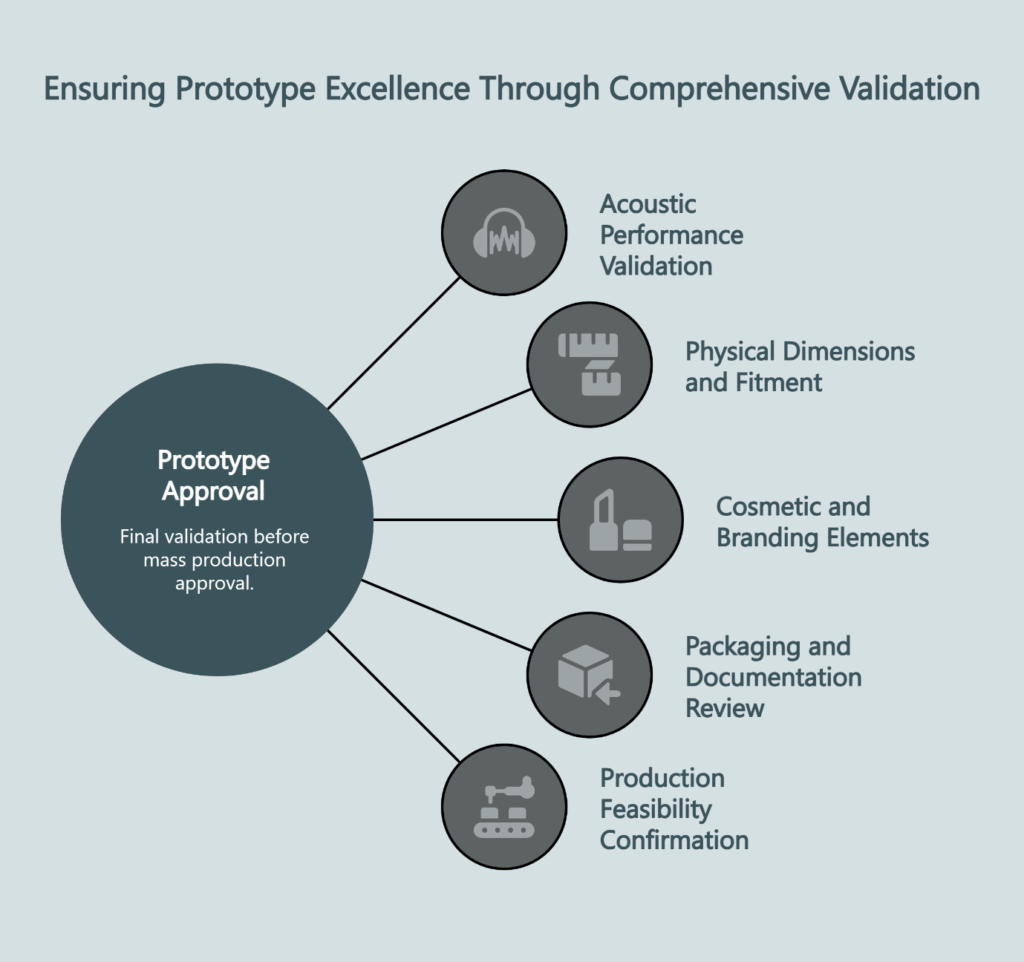
- Acoustic Performance Validation: Test the sample under actual operating conditions, not just bench measurements. Connect it to representative amplification and evaluate sound quality across the entire frequency range. Verify that performance matches your specifications and customer expectations.
- Physical Dimensions and Fitment: Confirm all measurements against your original specifications. Check mounting points, connector locations, and clearance requirements. This is particularly critical for replacement applications where precise fitment is essential.
- Cosmetic and Branding Elements: Examine all visual aspects including finish quality, color accuracy, logo placement, and text legibility. Ensure branding elements are positioned correctly and will reproduce consistently in mass production.
- Packaging and Documentation Review: Evaluate the complete customer experience including packaging design, included accessories, and documentation quality. Your customers’ first impression starts with the unboxing experience.
- Production Feasibility Confirmation: Discuss any manufacturing considerations that might affect consistency, cost, or timeline. Understanding potential production challenges now prevents surprises during mass manufacturing.
Document your approval in writing, including photographs of the approved sample from multiple angles. This documentation becomes your quality reference point for incoming production shipments.
What If…? Planning for Communication Gaps and Delays
Even with the best intentions, international partnerships can face communication challenges and unexpected delays. Recognizing this possibility isn’t pessimistic—it’s prudent planning that protects your business timeline.
Communication gaps often emerge around technical nuances that don’t translate clearly across languages or cultural contexts. The solution lies in establishing structured communication protocols from the beginning. Designate a single point of contact on both sides to avoid mixed messages. Implement regular status updates during active prototyping phases, and require written summaries of all verbal agreements.
For delays, build buffer time into your product launch timeline. According to the China Future Sound framework, the most critical factor is setting realistic expectations rather than optimistic projections. Allow adequate time for the complete prototyping process rather than planning around best-case scenarios.
Conclusion: Your Approved Sample is the Start of Your Supply Chain
Golden sample approval marks a significant milestone, but it’s actually the beginning of your supply chain management journey rather than the end of your development process. The approved sample becomes your quality benchmark for evaluating production runs, handling customer returns, and making future product improvements.
Looking ahead, your next challenge involves tooling for mass production—transforming your approved prototype into a scalable manufacturing process. This phase requires different skills and considerations, including production capacity planning, quality control systems, and inventory management strategies.
The knowledge you’ve gained through the prototyping process positions you as more than just a reseller—you’re evolving into a brand owner who understands product development, quality standards, and customer expectations. This foundation becomes invaluable as you expand your product portfolio and develop more sophisticated custom solutions.
Ready to transform your product concept into a manufacturing reality? The prototyping process might seem complex, but with the right partner guiding you through each stage, it becomes a systematic path to product success.
Our Editorial Process
This tutorial was drafted with AI assistance and has been reviewed, fact-checked, and edited by the expert humans on our Insights Team to ensure accuracy and clarity.
Purpose & Scope: This guide is intended as a comprehensive starting point. For decisions specific to your unique situation, we always recommend consulting a qualified professional.
By the China Future Sound Insights Team
The China Future Sound Insights Team is our dedicated engine for synthesizing complex topics into clear, helpful guides. While our content is thoroughly reviewed for clarity and accuracy, it is for informational purposes and should not replace professional advice.