📌 Key Takeaways
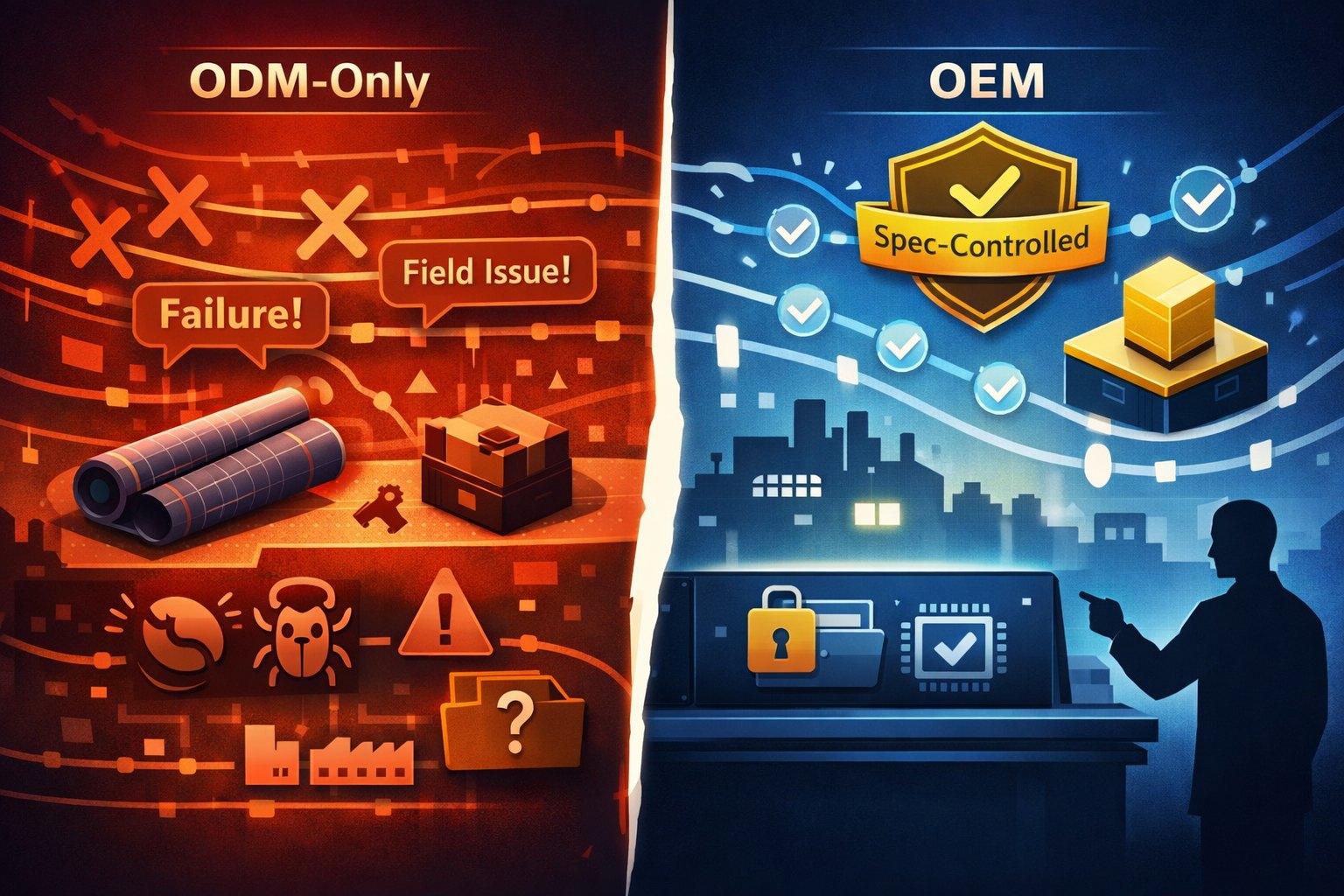
A single bad batch can erase a quarter’s profit, but most audio brands still rely on verbal approvals and email threads instead of a traceable physical benchmark.
- Golden Samples Eliminate Ambiguity: A jointly signed, physically perfect reference unit—with documented acoustic measurements, electrical parameters, and cosmetic standards—becomes the single source of truth that prevents supplier drift and settles disputes instantly.
- Twin Storage Enforces Accountability: Keeping identical Golden Samples at both the buyer’s facility and the factory floor ensures production workers measure every unit against the same standard, not against fading memory or outdated drawings.
- Automated QC Systems Catch Drift Early: KLIPPEL testing compares each production unit’s acoustic signature against Golden Sample tolerance bands (±1.5 dB, ±0.5 ohms), flagging deviations before thousands of defective units ship.
- Poor Quality Costs 25% of Sales: Organizations with weak quality systems see total quality costs—including scrap, rework, warranty claims, and support overhead—reach approximately 25% of sales, far exceeding any unit-price savings from “cheap” suppliers.
- Zero-Cost Implementation Prevents Expensive Failures: A one-day documentation effort to freeze specifications, digitize records, and train production lines costs nothing but prevents late-stage rework cycles, launch delays, and warranty spikes that destroy program profitability.
Prepared = stable supply, controlled launches, and protected margins.
Online audio retailers, e-commerce platform operators, and private-label audio brands managing OEM partnerships will find this framework essential here, preparing them for the detailed Golden Sample approval workflow and sign-off template that follows.
A shipment arrives from your supplier. The packaging looks right. The model numbers match. But when your QA team opens the first carton, the cone material feels different. The voice coil resistance is off by 0.3 ohms. The finish has a texture you didn’t approve. By the time you’ve tested five units, you realize you’re sitting on 2,000 speakers that don’t match what you ordered—and your product launch is three weeks away.
This scenario plays out more often than most audio retailers want to admit. The root cause is almost always the same: production drifted from the approved specification because there was no physical, traceable benchmark to enforce consistency. That benchmark is called a Golden Sample, and it’s the single most effective tool for preventing defective inventory before it reaches your warehouse.
What a ‘Golden Sample’ Is—And Why It’s Non-Negotiable
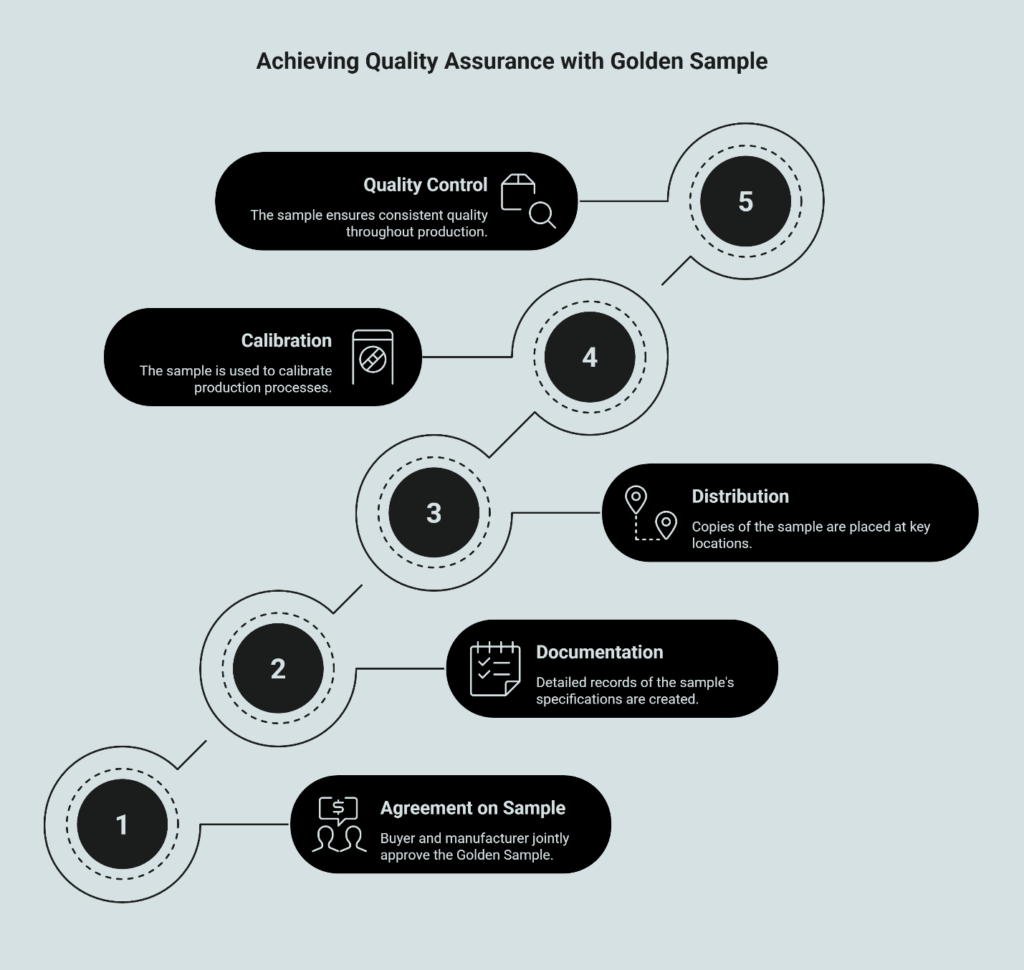
A Golden Sample is a physically perfect unit that represents the exact specification, appearance, performance, and quality standard for a production run. Think of it as the factory’s reference manual—except instead of pages, it’s an actual product that assembly-line workers, QA technicians, and incoming inspectors can measure against.
Here’s what makes it “golden”: both parties—buyer and manufacturer—sign off on it together. Photos are taken. Acoustic measurements are captured with precision tools like KLIPPEL systems. Electrical parameters are documented. Finish codes, dimensions, weight, packaging—everything is frozen and stored as the single source of truth. One copy stays with the buyer. A second stays on the factory floor. A third might go to a climate-controlled archive.
The factory laboratory metaphor applies here. Just as a lab maintains reference standards to calibrate instruments, a manufacturing line maintains Golden Samples to calibrate production. When a line supervisor asks, “Is this unit acceptable?” the answer isn’t subjective opinion—it’s a measurable comparison to the Golden Sample.
At facilities operating under ISO 9001:2015 quality management systems, the Golden Sample becomes part of a documented QMS that emphasizes traceability, controlled processes, and continual improvement. ERP and warehouse management systems enforce FIFO rules, barcode or QR binding links test data to individual units, and structured checkpoints at IQC (Incoming Quality Control), IPQC (In-Process Quality Control), and FQC (Final Quality Control) ensure the Golden Sample isn’t just a showcase piece in a cabinet—it’s a control point the entire factory respects.
Without this reference, “acceptable” becomes a negotiation. With it, “acceptable” becomes a fact.
The 5 Steps to Approving a Golden Sample

Creating a Golden Sample isn’t complicated, but it does require discipline. Miss one step, and the entire system loses integrity.
1. Freeze the specification and serialize the sample. Once you and the supplier agree on a prototype that meets your requirements, that unit becomes Golden Sample Candidate #1. Assign it a serial number. Lock down the bill of materials, the Rev number, and the assembly instructions. No changes are allowed after this point without creating a new Golden Sample and starting over.
2. Conduct joint sign-off and store twin samples. Both your QA lead and the factory’s QA manager must physically inspect the sample together. Measure frequency response, sensitivity, impedance, and THD. Verify cosmetic finish under controlled lighting. Weigh it. Photograph it from six angles. Then both parties sign a Golden Sample Sign-Off Form that binds the sample to a specific purchase order or forecast window. This “twin storage” approach—keeping one sample at your facility and one on the production floor where workers can reference it daily—is standard practice in serious OEM partnerships and ensures both sides maintain the same reference point.
3. Digitize all records and create the digital twin. Attach high-resolution photos, test reports, and material certifications to the sample’s serial number in your procurement database. This digital twin of the Golden Sample creates traceability. If a quality issue emerges six months later, you can pull the exact Golden Sample record and determine whether the factory deviated from the agreed standard or whether the standard itself needs revision.
4. Train the production line using KLIPPEL QC tolerance limits. Modern audio factories use automated QC systems like KLIPPEL to compare each unit against the Golden Sample’s acoustic signature. Set your tolerance bands—typically ±1.5 dB for frequency response and ±0.5 ohms for impedance—and program those limits into the test equipment. Workers don’t guess. The system flags any unit that falls outside the Golden Sample’s parameters. Line operators are trained to treat out-of-limit results not as nuisances but as early warnings that production is drifting away from the reference.
5. Link the purchase order to the sample revision and require lot conformance reports. Your PO should explicitly reference Golden Sample Serial #001, Rev B, signed on [date]. Require the factory to submit a First Article Inspection Report and periodic lot conformance reports showing that production units match the Golden Sample within the agreed tolerances. These reports follow acceptance sampling methodologies that use statistical controls to manage risk across high-volume production. This closes the loop and creates accountability.
How Factories Use Golden Samples at Scale
At China Future Sound, Golden Samples aren’t stored in a back office. They live on the production floor, inside climate-controlled cabinets with clear acrylic doors so workers can see them without handling them. Each cabinet is labeled with the SKU, revision, and acceptable tolerance ranges.
Here’s how they’re used in practice. Before a production run starts, the line supervisor pulls the Golden Sample and positions it at the first station. Assembly workers compare their work-in-progress units directly against it—checking cone centering, surround glue lines, terminal orientation, and gasket alignment. This happens before any electrical testing.
After assembly, every unit goes through automated testing on equipment calibrated to the Golden Sample’s acoustic and electrical benchmarks. The KLIPPEL QC system runs a frequency sweep, measures sensitivity at 1 meter, checks impedance at 1 kHz, and flags any unit that deviates. Units that pass receive a serialized QR code linking them to batch data, test results, and—critically—the Golden Sample revision they were measured against.
This is where the quality checkpoints come into play. The factory’s system requires three inspection gates: IQC for raw materials, IPQC during assembly, and FQC before packaging. At each gate, inspectors compare results to the Golden Sample’s documented parameters. Any deviation triggers a hold and a root-cause investigation.
The reliability lab performs periodic audits by pulling random units from the warehouse and testing them destructively—running them at twice rated power for 100 hours, then comparing the post-test measurements to the Golden Sample. If the units degrade more than expected, the entire lot is quarantined and the Golden Sample’s design assumptions are re-evaluated.
This multi-layer approach works because every decision point has an objective reference. There’s no ambiguity about what “good” looks like.
What Goes Wrong Without a Signed Golden Sample
The hidden costs of skipping Golden Sample protocols compound quickly. Research from the American Society for Quality indicates that total cost of poor quality—including scrap, rework, warranty claims, and support overhead—can reach approximately 25% of sales in organizations with weak quality systems. For an audio brand operating on 15-20% gross margins, that cost structure is unsustainable.
Consider a mid-sized audio brand that ordered 5,000 coaxial speakers for a private-label program. The supplier sent pre-production samples that sounded excellent. The brand approved them verbally and issued the PO. Three months later, the shipment arrived. The tweeters were 2 dB quieter than the samples, making the speakers sound muddy. Root cause: the supplier had switched to a cheaper ferrite magnet to preserve margin, assuming the buyer wouldn’t notice.
The brand faced a choice—accept inferior product or reject the shipment and miss their planned market entry date. They accepted it, discounted the entire SKU by 25%, and dealt with a flood of warranty claims. Total impact: $87,000 in lost margin, plus long-term brand damage. A signed Golden Sample with documented magnet specifications would have caught the substitution during first-article inspection.
Here’s what typically breaks down without Golden Samples. Suppliers interpret “same as sample” loosely. They make small cost-saving changes—switching adhesives, substituting plastics, adjusting voice coil windings—assuming the buyer won’t test every parameter. Quality drift happens gradually across production batches because there’s no fixed reference to enforce consistency. By the time the buyer discovers the problem, thousands of units have already shipped.
Rework costs escalate. A defect rate of 3% sounds manageable until you calculate the labor cost of inspecting, sorting, repairing, and re-shipping 150 units out of every 5,000. Add the cost of holding inventory while you sort good from bad, the expedited freight to meet your deadline, and the opportunity cost of missing your launch window.
Brand equity suffers. Even if you catch the defects before they reach end customers, the delay damages your market reputation and erodes confidence with distribution channels. Miss the defects entirely, and warranty claim rates can spike to 8% within the first 90 days—creating a support burden that consumes engineering bandwidth and destroys program profitability.
Another common risk is the “simplicity play” supplier who claims that detailed Golden Sample work creates unnecessary delays. In practice, the opposite happens. A well-run Golden Sample protocol is fast and effectively zero-cost to adopt—it formalizes work that technical teams are already doing. Without it, more rounds of ad-hoc samples get requested because expectations were never aligned, late-stage changes trigger rework, and launches slip due to quality concerns that a disciplined process would have caught earlier.
The “fast and cheap” supplier ends up being the most expensive choice—not because their unit price was high, but because the total cost of poor quality dwarfs the savings.
Make It Real: Your Golden Sample Sign-Off Form (Copy-Paste)
Use this template to formalize Golden Sample approval with your supplier. Fill out every field before signing, and make sure both parties retain a copy.
Golden Sample Sign-Off Form
- SKU / Model Number: _________________
- Revision: _________________
- Serialization ID (GS-xxxx): _________________
- Photos Attached: (Front view, back view, label detail, packaging, 2 additional angles)
- Physical Dimensions (L × W × H): _________________ inches (_________________ mm)
- Weight: _________________ oz (_________________ g)
- Finish / Color Codes: _________________
- Acoustic Snapshot: Frequency response plot timestamp: _________________; SPL tolerance: ± _____ dB at _____ Hz
- Electrical Snapshot: Impedance curve reference: _____ ohms at 1 kHz; tolerance: ± _____ ohms
- QC Test List: ATE checklist items: _________ | KLIPPEL parameters: _________
- Buyer QA Signature / Date: _________________ / _________________
- Factory QA Signature / Date: _________________ / _________________
- Linked Purchase Order Number: _________________
- Forecast Window Covered: From _________ to _________
- Lot Conformance Report Requirements: Frequency: _________ | Sample size per lot: _________ | Acceptance criteria: _________
This form becomes a binding attachment to your purchase order. Any deviation from the parameters documented here requires a written change request and a new Golden Sample approval cycle.
Next Step: Apply This on Your Current Program
If you’re evaluating a new supplier or launching a private-label program, implementing Golden Sample protocols should happen before you issue a PO. Here’s the conversation to have with your factory contact:
“We need to establish a Golden Sample process for this program. That means we’ll jointly approve a serialized unit, document all critical parameters including acoustic measurements, and store reference copies at both locations. Your production line will use KLIPPEL QC to verify every unit matches the Golden Sample within agreed tolerances, and you’ll provide lot conformance reports with each shipment. Can you walk me through how your facility currently handles Golden Sample management?”
A competent supplier will describe their process confidently, show you photos of their Golden Sample storage, and explain how they train production workers to use the samples. They’ll mention calibration schedules, tolerance tracking, and corrective action procedures. If the supplier seems unfamiliar with the concept or resists formalizing the process, that’s a red flag worth addressing before you commit to volume production.
For programs already in progress, it’s never too late to implement Golden Samples. Pull a unit from current production that meets specification, freeze it as your baseline, and apply the same documentation and sign-off process. Then require the factory to measure all future production against it.
The time investment is minimal—usually one day to document a Golden Sample properly. The cost is zero. The protection it provides against bad batches is substantial.
If you’d like to discuss how Golden Sample protocols fit into your next audio program, our team at China Future Sound can walk you through our facility’s approach to traceable amplifier manufacturing and car audio production. We’ve built our QA systems around the principle that every unit should be measurably identical to the sample you approved. For more on managing supplier timelines and quality gates, see our guide from RFQ to SOP and our OEM supplier due diligence checklist.
Request a Golden Sample review call: +86 139 6730 8635 | hu@chinafuturesound.com
Our Editorial Process
Our expert team uses AI tools to help organize and structure our initial drafts. Every piece is then extensively rewritten, fact-checked, and enriched with first-hand insights and experiences by expert humans on our Insights Team to ensure accuracy and clarity.
About the China Future Sound Insights Team
The China Future Sound Insights Team is our dedicated engine for synthesizing complex topics into clear, helpful guides. While our content is thoroughly reviewed for clarity and accuracy, it is for informational purposes and should not replace professional advice.