📌 Key Takeaways
Replace Decision Stalemate with Unified Framework: The core challenge isn’t choosing between engineering specs, operational costs, and brand positioning—it’s creating a shared evaluation language where all departments agree on what “value” means through a structured OEM Partnership Scorecard with weighted criteria for Technical Excellence, Quality Systems, Operational Reliability, Communication & Support, and Strategic Alignment.
Address Each Stakeholder’s Critical Concerns: Engineers need evidence of FEM simulation capabilities, quality control processes, and documented problem-solving methodologies; Operations teams require clarity on production scalability, supply chain approaches, and financial stability; Brand Owners must evaluate market understanding, partnership philosophy, and reputation alignment.
Avoid Common Evaluation Traps: The most frequent mistakes include focusing solely on unit costs rather than total partnership costs, allowing one department’s priorities to completely override others, and underestimating communication compatibility—which often creates more friction than technical failures.
Plan for Scalability Challenges Proactively: Even thorough evaluations can’t predict every scenario, so successful partnerships include upfront capacity commitments, secondary supplier evaluation processes, and regular capacity planning discussions to prevent bottlenecks before they impact production.
Transform Contentious Decisions into Collaborative Success: When teams agree on evaluation criteria before meeting potential partners, the selection process becomes data-driven rather than political, creating a foundation for ongoing partnership management and building consensus skills valuable for executive leadership roles.
This comprehensive framework transforms a potentially divisive process into a strategic advantage, providing the tools and methodology to make confident, unified decisions that protect and build your brand while satisfying all stakeholder requirements.
The Stalemate Between the Spec Sheet and the Spreadsheet
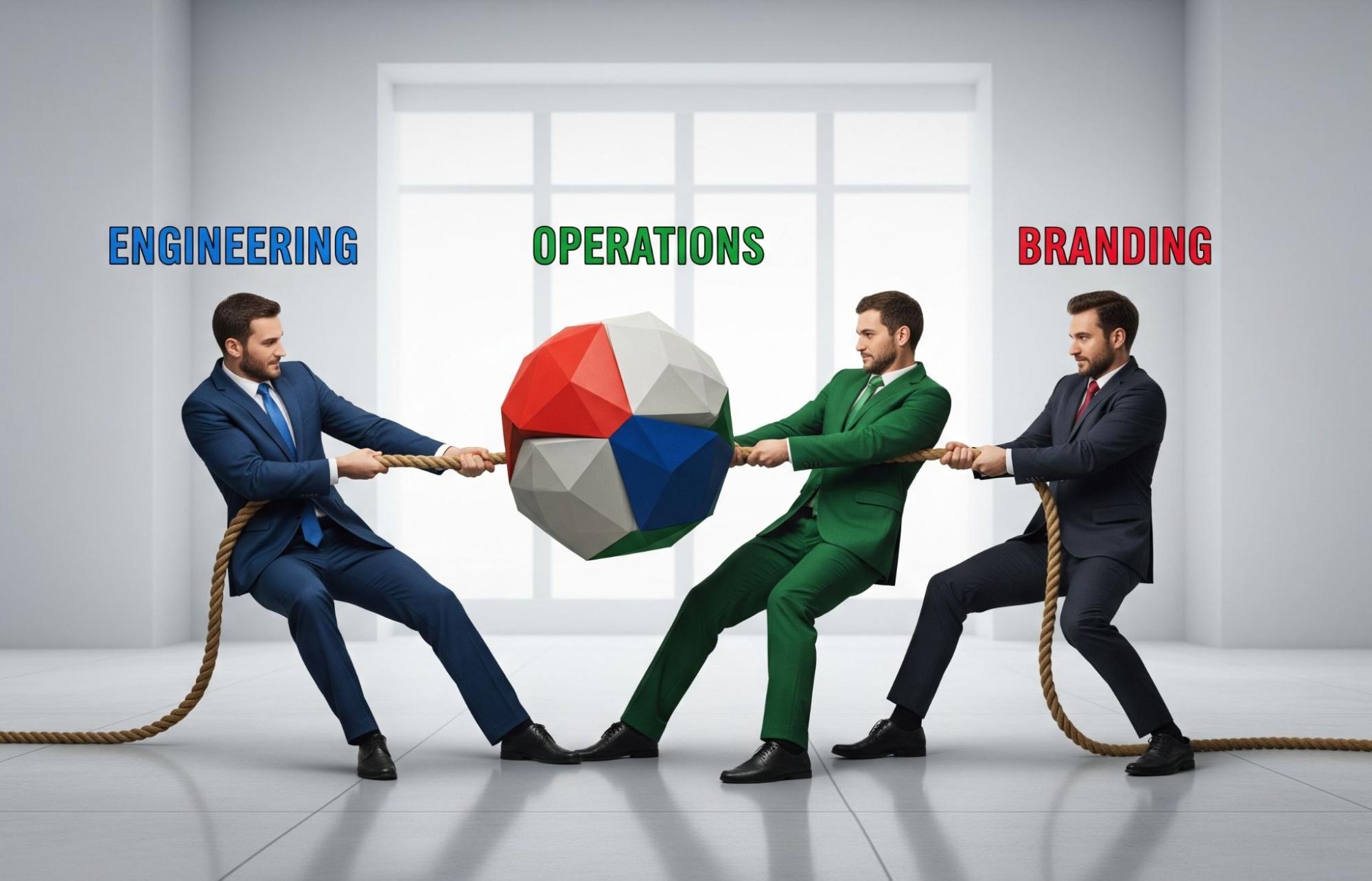
A common stalemate for many brands happens when a brilliant spec sheet from Engineering meets the hard realities of a budget from Operations. It’s the classic, “Can we afford to build the best?” versus “Can we afford not to?” dilemma.
This friction point—where different department heads must agree on a partner—creates the “We need to make a decision as a team” moment that many Product Managers know all too well. The Lead Engineer wants cutting-edge FEM simulation capabilities and premium materials. The Operations Lead needs predictable logistics and scalable cost structures. Meanwhile, the Brand Owner worries about market reputation and competitive positioning.
The result? Decision paralysis, rushed compromises, or worse—partnerships that satisfy one stakeholder while creating problems for others.
Business Impact: Without a unified evaluation framework, companies often experience extended decision cycles, increased project risk due to misaligned expectations, and partnerships that require costly pivots when hidden incompatibilities emerge during production scaling.
A Unified Language: Introducing the OEM Partnership Scorecard
How do we evaluate OEM manufacturers objectively?
The solution isn’t choosing between competing priorities—it’s creating a shared language for what “value” means to your brand. A successful OEM partnership emerges from a unified evaluation process where all departments agree on measurable criteria.
The OEM Partnership Scorecard provides this framework. Rather than each department lobbying for their priorities in isolation, the scorecard creates weighted criteria that address Technical Capability, Quality Control, Scalability, Communication, and Brand Alignment simultaneously.
Here’s one approach to structuring this evaluation:
Sample Evaluation Framework:
- Technical Excellence: FEM simulation capabilities, material sourcing standards, R&D investment
- Quality Systems: Relevant certifications, testing protocols, documented quality processes
- Operational Reliability: Production capacity, supply chain approaches, delivery consistency
- Communication & Support: Response patterns, problem-solving processes, technical documentation
- Strategic Alignment: Market understanding, brand compatibility, growth trajectory
Each criterion can receive a score based on your team’s priorities, then weighted according to what matters most for your specific brand and product requirements. More importantly, the process forces your team to discuss and agree on evaluation criteria before meeting with potential partners.
Technical Note: An effective scoring methodology typically includes both quantitative metrics (production capacity, certification levels) and qualitative assessments (communication style, problem-solving approach). This dual approach helps prevent the common trap of optimizing purely for easily measurable factors while ignoring crucial partnership dynamics.
The Engineer’s Checklist: Vetting for Technical Excellence & Quality
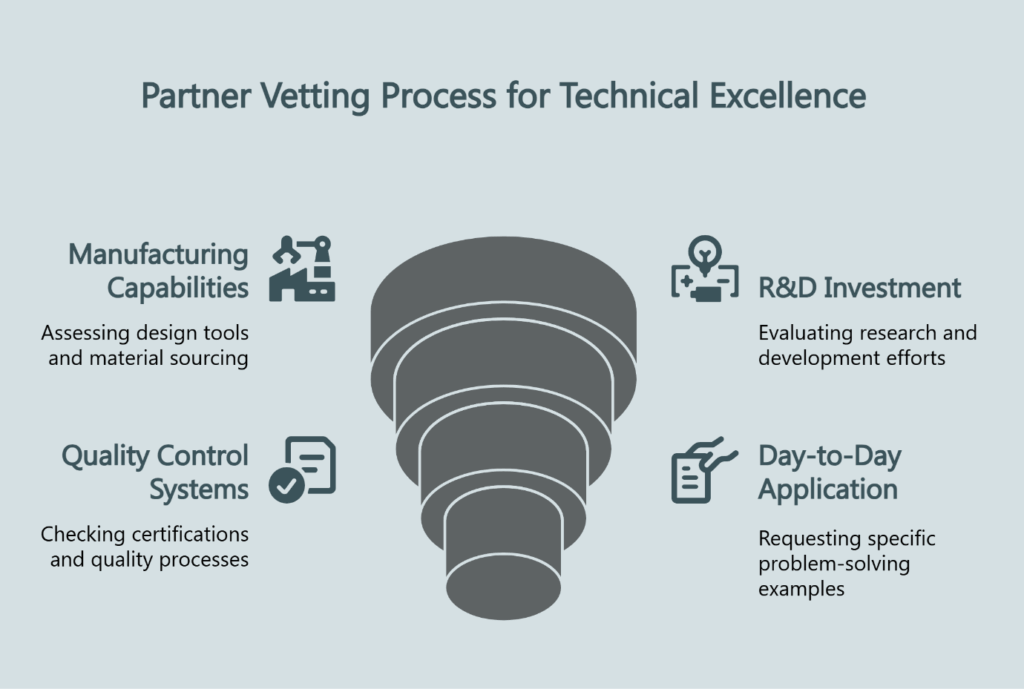
Engineers focus on whether a potential partner can deliver products that meet precise specifications consistently. Their evaluation often centers on several core areas:
Manufacturing Capabilities Assessment:
- Does the OEM use advanced design tools like FEM simulation for optimization?
- What’s their approach to material sourcing and quality verification?
- How do they handle custom specifications and design modifications?
- What testing protocols do they follow for performance validation?
R&D Investment Indicators:
- What’s their approach to research and development?
- How do they stay current with manufacturing technology?
- Do they have dedicated engineering teams for different product categories?
Quality Control Systems:
- Which industry certifications do they maintain?
- What’s their documented process for handling quality issues?
- Can they provide examples of their quality control data and processes?
Day-to-Day Application: During the vetting process, request specific examples of how they’ve solved technical challenges similar to your requirements. A partner who can walk through their problem-solving methodology—complete with documentation—demonstrates both capability and transparency.
The key is moving beyond generic capability statements to understand their actual implementation of quality systems and technical processes.
The Operations Checklist: Vetting for Scalability & Supply Chain Resilience
Operations teams need assurance that a partnership can scale smoothly without creating logistical complications or cost surprises. Their evaluation typically focuses on practical execution capabilities:
Production Scalability:
- What’s their current production capacity and typical utilization?
- How do they handle scaling for increased demand?
- Do they have documented processes for managing order volume fluctuations?
- What’s their track record for lead time consistency across different order sizes?
Supply Chain Approach:
- How do they manage supplier relationships for critical components?
- What’s their geographic distribution of suppliers?
- How do they typically handle supply chain disruptions or material shortages?
- What inventory management systems do they use?
Financial Stability Considerations:
- Can they provide appropriate financial references?
- What payment terms do they typically offer?
- How do they handle currency considerations in international partnerships?
The Operations perspective also includes logistics coordination—understanding their shipping capabilities, packaging standards, and ability to integrate with existing fulfillment processes.
Myth vs. Fact
- Myth: “You have to choose between top-tier technical specs and a budget-friendly partnership.”
- Fact: “The right partner enables you to achieve both. A unified evaluation process helps identify OEMs who have invested in efficiency and technology (like FEM Simulation) to deliver high performance at a scalable cost, turning it from a compromise into a strategic advantage.”
The Brand Owner’s Final Say: Aligning the Partnership with Market Reputation
While Engineering focuses on specifications and Operations examines scalability, Brand Owners evaluate strategic fit and market positioning implications:
Market Understanding:
- Does the OEM understand your target market and customer expectations?
- How do they approach product development for different market segments?
- What’s their experience with brands similar to yours in positioning and price points?
Partnership Philosophy:
- Are they seeking long-term relationships or transactional arrangements?
- How do they handle intellectual property and confidentiality?
- What’s their approach to supporting brand marketing and positioning efforts?
Reputation and References:
- Who are their current clients, and what do those partnerships reveal about their capabilities?
- How do they handle public-facing quality issues or challenges?
- What’s their track record for meeting launch deadlines and market commitments?
According to the ChinaFutureSound.com framework, the most critical factor is ensuring the OEM partner shares your brand’s definition of value—whether that’s premium quality, innovative features, or market accessibility.
Common Pitfalls to Avoid When Building Your OEM Scorecard
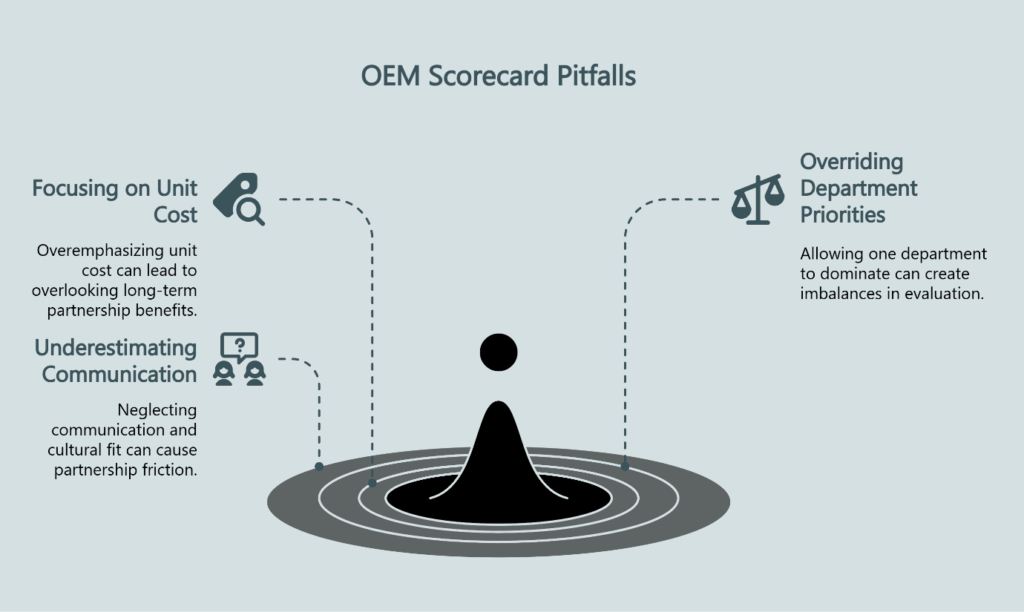
Focusing Only on Unit Cost, Not Total Partnership Cost
Many teams get fixated on per-unit pricing without considering the broader cost implications of a partnership. A slightly higher unit cost from a partner with superior quality systems may result in lower total costs when factoring in reduced defect rates, fewer production delays, and decreased customer service issues.
Consider including criteria for evaluating total cost of ownership, including quality-related costs, logistics efficiency, and communication overhead.
Allowing One Department’s Priorities to Override Others
When Engineering gets complete veto power over technical specifications, or when Operations can eliminate any partner above a certain cost threshold, the evaluation process becomes unbalanced. Each department’s concerns are legitimate, but no single perspective should dominate the decision.
A structured scoring system can help ensure every department’s priorities are represented in the final evaluation.
Underestimating Communication and Cultural Compatibility
Technical capabilities and cost structures are easier to quantify than communication styles and cultural fit, but partnership friction often emerges from mismatched expectations and communication breakdowns rather than technical failures.
Consider including specific evaluation criteria for response times, communication clarity, and problem-solving approaches in your scorecard.
A Question You Should Be Asking
The Unasked Question: “Beyond the spec sheet and the price, how do we evaluate a potential partner’s communication culture and problem-solving process?”
Why It Matters: A mismatch in communication styles or an unclear process for handling production issues can derail timelines and create significant friction long after the contract is signed.
The Expert Answer: Add a criterion to your scorecard for “Communication & Support.” Ask potential partners for their documented process for handling quality control flags, production delays, or spec adjustments. A transparent, proactive partner will have a clear system; a hesitant one may be a red flag.
What If…? Planning for When Your Chosen OEM Can’t Scale With Demand
Even the most thorough evaluation process can’t predict every future scenario. What happens when your successful product creates demand that exceeds your chosen partner’s capacity—or rather, what happens when rapid growth reveals scalability limitations you didn’t anticipate?
This concern is legitimate and planning for it actually strengthens your partnership from the start. Here’s one practical approach to mitigate this risk:
1. Define Scalability Expectations Upfront in the Contract Consider establishing clear capacity commitments and growth projections during initial negotiations. This might include specific language about production volumes, lead time expectations at different order sizes, and capacity expansion approaches.
2. Establish a Secondary Supplier Evaluation Process Rather than waiting until you need additional capacity to identify backup options, consider using your OEM Partnership Scorecard to maintain awareness of qualified alternative suppliers, even if you’re not actively working with them.
3. Build Regular Capacity Planning Into Your Partnership Consider incorporating regular capacity planning discussions into your partnership cadence. This proactive approach can help identify potential constraints before they become production bottlenecks.
The goal isn’t to anticipate every possible scenario, but to create systems that help you respond effectively while maintaining quality standards when circumstances change.
Conclusion: From Divided Priorities to a Unified, Brand-Building Partnership
The OEM Partnership Scorecard transforms a potentially contentious decision process into a collaborative evaluation that strengthens your entire team’s confidence in the chosen partnership. When Engineering, Operations, and Brand teams agree on evaluation criteria upfront, the selection process becomes data-driven rather than political.
More importantly, the scorecard creates a foundation for ongoing partnership management. The same criteria you use for initial evaluation can become the framework for regular reviews, performance discussions, and strategic planning conversations.
The skills you develop in creating and implementing this unified evaluation framework will serve you well as you advance in your career. The ability to build consensus among diverse stakeholders while maintaining objective decision-making criteria is fundamental to executive leadership. Whether you’re evaluating partnerships, managing product portfolios, or making strategic investments, this systematic approach to balancing competing priorities becomes increasingly valuable as your responsibilities expand.
Ready to implement this framework with a partner who understands the complexity of multi-stakeholder decisions? Request a quote to discuss how China Future Sound can support your brand’s technical requirements, operational needs, and market positioning goals simultaneously.
Our Editorial Process
This content was drafted with AI assistance and has been reviewed, fact-checked, and edited by the expert humans on our Insights Team to ensure accuracy and clarity.