📌 Key Takeaways:
Documentation quality predicts supplier reliability across every operational dimension, making compliance packages your fastest path to identifying trustworthy manufacturing partners.
NRTL Recognition Trumps Brand Preference: UL and ETL marks carry identical regulatory weight under OSHA’s program—acceptance depends on proper documentation, not which laboratory conducted the testing.
Model-Report Alignment Prevents Costly Delays: A single character mismatch between your test report and product labeling triggers receiving holds that can stall entire shipments for days.
Evidence Packs Accelerate Onboarding: Suppliers who provide current certificates, label artwork, and lab contact information demonstrate the systematic approach that correlates with superior quality control.
Pre-Compliance Reviews Reduce Program Risk: Factory tours and documentation audits during supplier evaluation reveal manufacturing maturity that extends far beyond safety compliance.
Standardized Acceptance Matrices Scale Efficiently: Using consistent evaluation criteria across your supplier network maintains quality standards while accommodating growth and complexity.
Systematic supplier qualification based on compliance readiness creates operational advantages that compound throughout the entire partnership.
For purchasing and compliance professionals at audio equipment dealers and distributors who need to evaluate supplier reliability and minimize receiving complications, these strategies transform routine compliance checks into competitive advantages.
No mark, no movement.
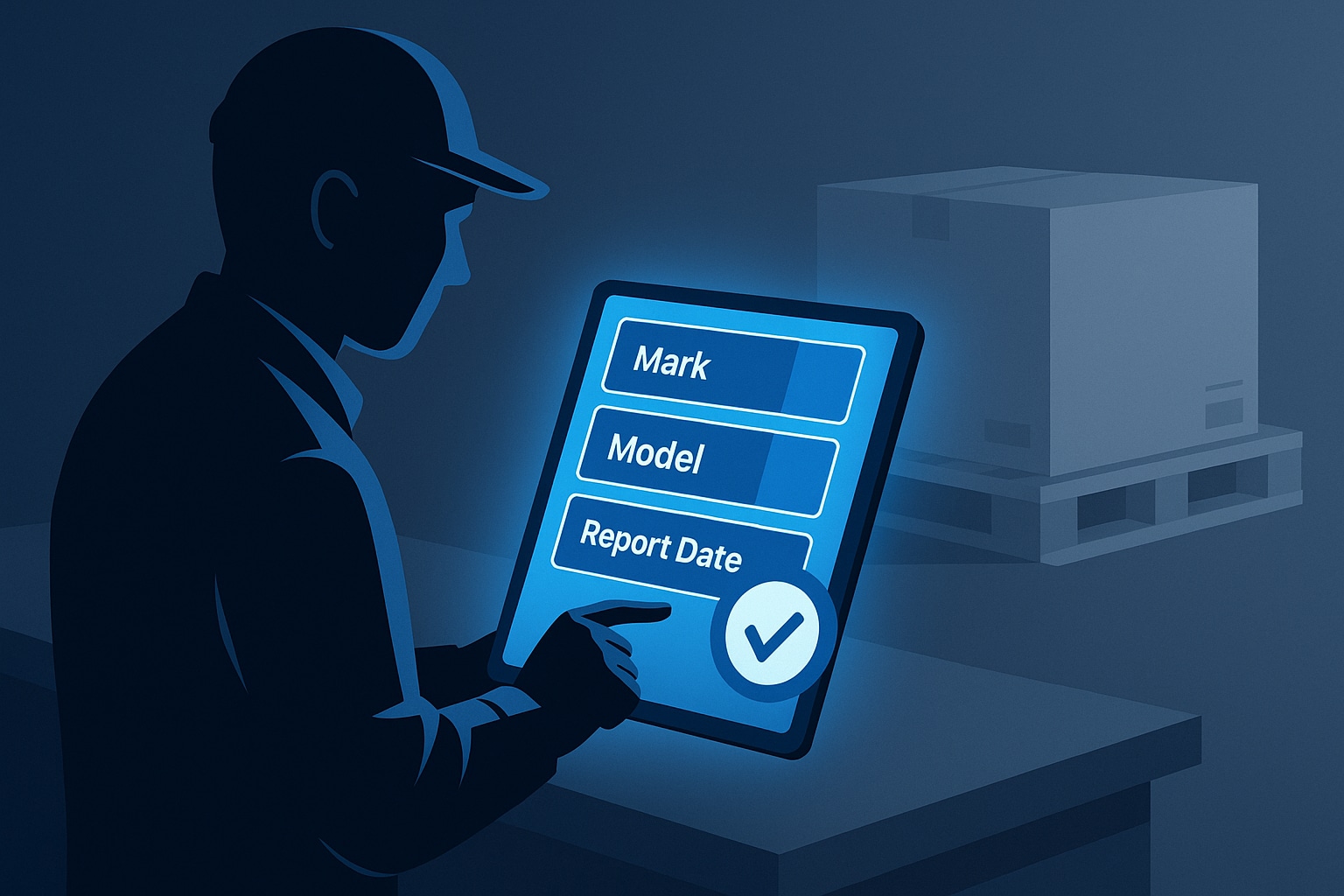
In receiving, the carton lands on the bench. A tech traces a finger over the safety listing mark, checks that the model on the label matches the SKU on the PO, and asks for a current, traceable report. If anything’s off, the pallet waits. Sometimes for days.
The challenge many dealers face isn’t just finding compliant amplifiers—it’s understanding which safety marks are universally accepted and what documentation speeds the acceptance process. Missing this critical validation step can turn routine receiving into a bottleneck that impacts your entire supply chain.
Here’s the practical bottom line dealers use: a safety listing is proof from a recognized Nationally Recognized Testing Laboratory (NRTL) that an amplifier meets applicable electrical safety standards. For U.S. distribution, acceptance hinges on three things—the mark, the model match, and report freshness—not on whether the mark says UL or ETL.
What “Safety Listing” Really Means (and Who Recognizes It)
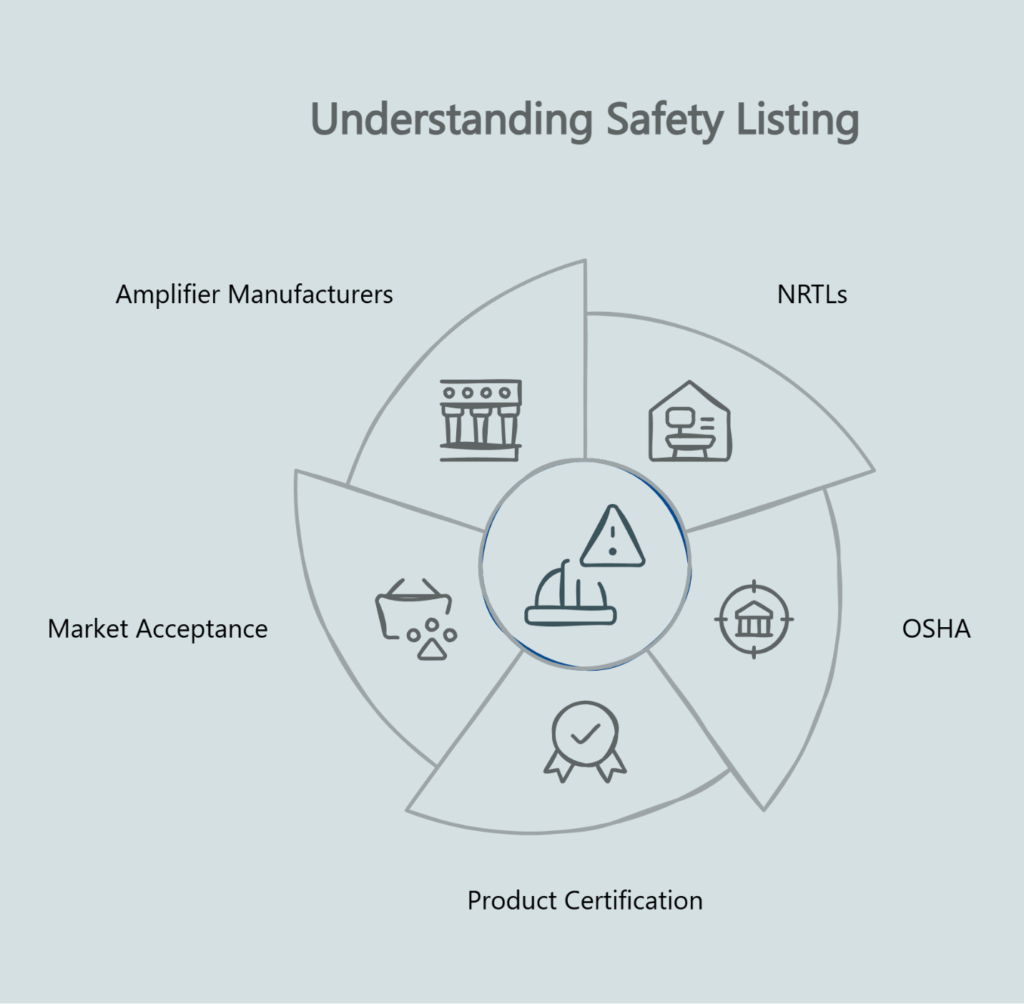
Safety listing represents a formal evaluation process where an NRTL tests electrical products against established safety standards and grants permission to display their certification mark. The Occupational Safety and Health Administration (OSHA) maintains the official list of recognized testing laboratories, ensuring these organizations meet strict criteria for technical competence and quality systems.
A safety listing is third-party certification to an electrical safety standard, issued by an OSHA-recognized NRTL. OSHA runs the NRTL program that recognizes private labs to test and certify products used in U.S. workplaces, which is why both UL and Intertek are acceptable when properly applied.
This recognition system creates a framework where products bearing NRTL marks gain broad acceptance across retail channels and commercial installations. The key distinction lies between “listed” and “recognized”—listed means the product appears in the NRTL’s published directory with a specific file number, while recognized means OSHA acknowledges the testing laboratory’s authority to make these determinations.
For amplifier manufacturers, this system provides clear pathways to market acceptance. Rather than navigating different requirements for each customer, suppliers can focus on achieving listing with established NRTLs that distributors already recognize and trust.
Key takeaway: For acceptance, the question is “Is the lab an OSHA-recognized NRTL and does the documentation trace cleanly to this exact model?”—not which brand of NRTL you used.
UL vs. ETL: Same NRTL Concept, Different Marks
Both UL and ETL represent legitimate NRTL pathways, each with distinct advantages for different business priorities. UL and Intertek (ETL) are both NRTLs. Their marks look different, but each signifies a similar outcome: the product was evaluated to the relevant standard(s) and is authorized to bear the lab’s certification mark.
UL (Underwriters Laboratories) operates as the most widely recognized testing organization in North America. Their extensive database and established relationships with major retailers create broad market acceptance. UL describes its Enhanced and Smart Certification Marks—how they’re used and how to identify them—providing substantial documentation for traceability purposes.
ETL (Intertek) offers equivalent NRTL status with potentially faster turnaround times and competitive pricing structures. Intertek details the ETL Listed Mark and its acceptance context, making it equally acceptable for most commercial applications. ETL’s streamlined processes often appeal to manufacturers managing tight development schedules.
The fundamental principle remains consistent: both organizations test to the same underlying safety standards applicable to audio equipment. The difference lies in operational approaches, testing methodologies, and market positioning rather than regulatory acceptance.
So dealers generally treat UL and ETL the same—provided the paperwork is right.
What Dealers Actually Check: Marks, Model Match, Report Freshness
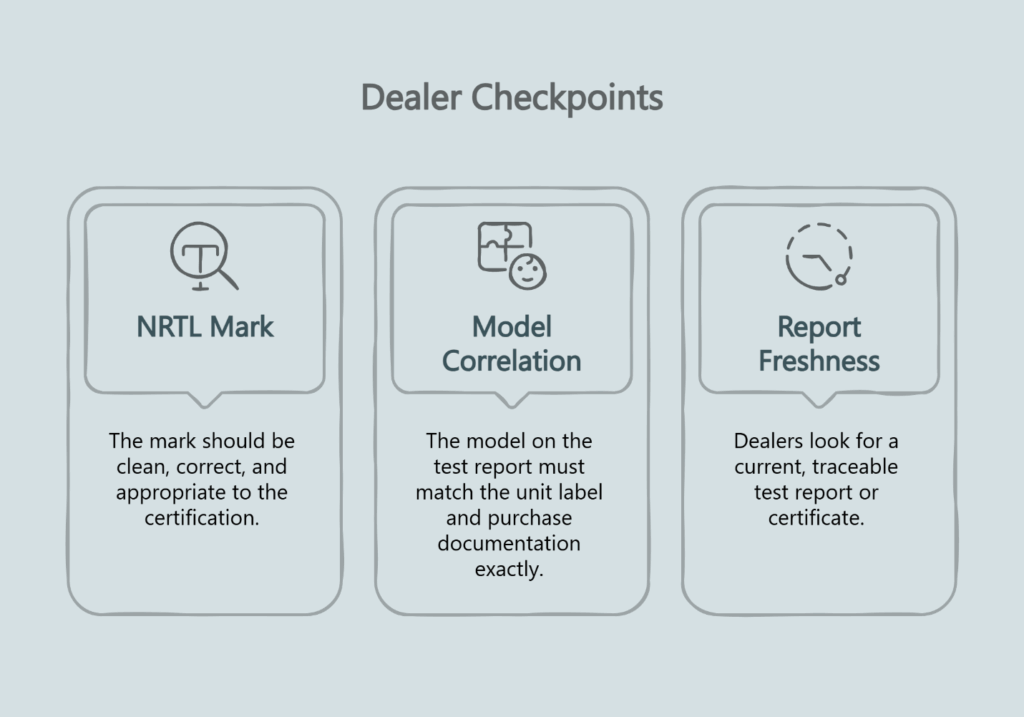
Receiving departments follow systematic validation procedures that go beyond simply confirming a safety mark exists. Understanding these checkpoints helps suppliers prepare appropriate documentation packages.
- Recognized NRTL mark on unit and/or carton. The mark should be clean, correct for the market (U.S. vs. Canada), and appropriate to the certification. UL Solutions publishes guidance on mark format and placement; if the mark looks improvised, that’s a red flag.
- Exact model/SKU correlation. The model (and if applicable, variant) on the test report must match the unit label and purchase documentation exactly.
- Report freshness and traceability. Dealers look for a current, traceable test report or certificate (with standard(s) cited), plus label artwork that matches the physical unit. Many will also ask for a contact at the certifying lab to verify status. Intertek’s public ETL Listed Mark Directory can help with spot checks.
The documentation package that speeds acceptance includes the original test report, current certificate of compliance, authorized label artwork, and clear model correlation matrix. Suppliers who organize these elements proactively reduce processing delays and build stronger dealer relationships.
Documentation That Speeds Acceptance (COC, Test Reports, Label Art)
Have an evidence pack ready before first article arrives:
- Certification document (certificate or CB report extract) listing the applicable standards and exact model/variant
- Most recent test report cover page (or listing page) that shows report number, date, and standards
- Label artwork (unit and carton) that matches the certified model and market. UL explains how its enhanced marks appear; Intertek does the same for ETL
- Contact info for lab verification (helpful when buyers want to validate in a public directory or via the lab)
Mini checklist (copy/paste):
- Mark present and correct (UL or ETL)
- Model/SKU on label = model on report
- Report/certificate date acceptable for your policy window
- Label artwork exactly matches certified artwork (no edits)
- Lab directory or contact available for verification
Documentation traceability moves pallets. The right mark plus the right paperwork clears receiving faster.
Professional dealers have learned that documentation quality often predicts supplier reliability across multiple operational areas. A well-organized compliance package suggests attention to detail that extends to quality control, customer service, and supply chain management.
The most efficient suppliers develop standardized compliance packages that accompany every shipment, reducing the time receiving staff spend locating and verifying required information. This systematic approach builds confidence and supports repeat ordering decisions.
Common Failure Modes (and How to Avoid Receiving Holds)
Analysis of receiving hold patterns reveals recurring issues that dealers can anticipate and suppliers can prevent through systematic preparation:
- Model mismatch. A single letter or suffix off on the label vs. report can trigger a hold. Fix: Lock a model-naming convention during NPI and mirror it in certification files.
- Stale documentation. Old summary sheets without clear dates stall acceptance. Fix: Include the latest listing page cover every time.
- Mark artwork errors. Scaled, stretched, or outdated badges raise questions. Fix: Source mark files from UL’s Marks & Label Hub (not from slide decks or old PDFs).
- Wrong market mark. Supplying a Canada-only or combined US/Canada mark when the PO is U.S.-only (or vice versa). Fix: Confirm market scope before print.
- No directory footprint. Buyers can’t validate. Fix: Include the lab’s public directory link or a lab contact.
Prevention strategies focus on supplier qualification during the evaluation phase. Dealers can request sample documentation packages, verify current NRTL database listings, and establish clear communication protocols for ongoing compliance management.
Use Our Acceptance Matrix to Pre-Screen Suppliers
Systematic supplier evaluation requires consistent criteria that purchasing teams can apply across different manufacturers and product categories. An acceptance matrix standardizes these evaluations while maintaining flexibility for specific business requirements.
Acceptance Matrix (UL vs. ETL vs. Other NRTL)
| NRTL Mark | Recognition (U.S.) | What You Verify | Report/Cert “Freshness” |
|---|---|---|---|
| UL | Recognized NRTL under OSHA program | Mark format, model match, standards cited | Per buyer policy; include latest listing page |
| ETL (Intertek) | Recognized NRTL under OSHA program | Mark format, model match, standards cited | Per buyer policy; include latest listing page |
| Other NRTL | Must be on OSHA’s NRTL list | Same checks as above | Same as above |
Standardize your process with a one-page acceptance matrix: columns for NRTL mark, standards family, report date window, model/variant match, label art verified, and lab contact. Use it to evaluate new suppliers during NPI and again before first-article shipments.
Explore our amplifier manufacturing services to see how we build compliance into DFM/DFX processes, or browse our pro audio platforms for current sourcing options.
Next Steps: Proof-First Conversations and Offline Validation
Moving from supplier identification to partnership requires verification of compliance capabilities and operational alignment. Most dealer teams follow a ROBO pattern—research online, then validate offline.
Pre-compliance reviews allow dealers to evaluate supplier capabilities before committing to significant inventory investments. These discussions focus on testing protocols, documentation management systems, and change control processes that maintain compliance over time.
Factory tours provide insight into quality control systems, manufacturing consistency, and the organizational culture that supports ongoing compliance. Dealers can observe firsthand how suppliers manage component sourcing, production monitoring, and final inspection processes.
Bring your evidence pack to the pre-compliance review; if you’re scheduling first-article, include your matrix and latest listing page so receiving can pre-approve labels.
Ready to talk through your document bundle or first-article plan? Contact our team to set up an in-person pre-compliance review.
Frequently Asked Questions
Is ETL accepted everywhere that UL is?
Both are NRTL marks. Acceptance depends on NRTL recognition and clean documentation (mark, model match, standards cited), not the brand of mark. OSHA’s program recognizes multiple NRTLs that certify to U.S. standards.
What counts as a “current” test report?
There’s no single federal age rule; buyer policies differ. Practically, provide the latest listing or report cover page and ensure the cited standards are still the ones your product is certified to. UL and Intertek explain how to identify current marks and listings.
Do unit and carton labels need identical information?
They must not conflict and must both align with the certification artwork and model naming. Use the lab’s official mark files (e.g., UL’s Marks & Label Hub) to avoid artwork mistakes.
What if the model on the report doesn’t match the SKU?
Pause shipment or re-label. Dealers treat mismatches as non-conformances. Align naming during NPI and update certification docs before mass production.
Editorial Note & Buyer Policy Reminder
This guide is informational and focuses on acceptance/recognition and documentation expectations. Always confirm the specific mark recognition policies of your retailer/distributor partners and any local AHJ requirements before shipping.
About the China Future Sound Insights Team
The China Future Sound Insights Team is our dedicated engine for synthesizing complex topics into clear, helpful guides. While our content is thoroughly reviewed for clarity and accuracy, it is for informational purposes and should not replace professional advice.
Our Editorial Process
Our expert team uses AI tools to help organize and structure our initial drafts. Every piece is then extensively rewritten, fact-checked, and enriched with first-hand insights and experiences by expert humans on our Insights Team to ensure accuracy and clarity.